This Is What Happens When You Actually Check In to Bucharest
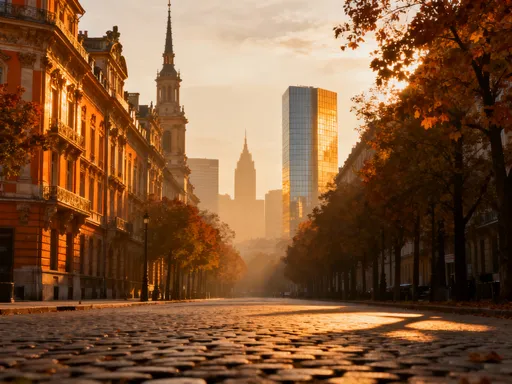
You know that moment when a city surprises you? Bucharest did exactly that. I checked in expecting faded Communist blocks and not much else — but was hit with golden light on baroque facades, quiet courtyards buzzing with life, and views that felt almost cinematic. From rooftop terraces overlooking the city’s layered skyline to hidden alleys framing vintage charm, the viewing experience here is real. This isn’t just Eastern Europe — it’s a visual story waiting to unfold, one honest glance at a time.
First Impressions: Beyond the Expected
Arriving in Bucharest often means confronting assumptions shaped by outdated narratives. Travelers might picture a capital still weighed down by its 20th-century history — concrete structures, neglected streets, and a certain urban fatigue. Yet within minutes of stepping into the city center, those expectations begin to soften. The first real surprise is the sheer variety of architectural styles that coexist, often within a single city block. Belle Époque buildings with ornate cornices and floral stonework stand shoulder to shoulder with interwar apartment blocks adorned with wrought iron balconies and pastel hues. The greenery spilling over wrought-iron railings, the sunlight catching on gilded church domes, and the quiet hum of life in tree-lined squares all contribute to a different story — one of resilience, beauty, and layered identity.
What shifts the perception so quickly is not just the architecture, but the atmosphere. The city doesn’t feel frozen in time or stuck in transition — it feels alive with quiet momentum. Streets like Strada Arthur Verona or the quieter stretches of Bulevardul Magheru offer a glimpse into a Bucharest that values elegance and detail. Even in areas once marked by neglect, there’s a sense of ongoing renewal. Restoration projects on historic villas, repainted facades, and the emergence of small cafes in former administrative buildings all signal a city re-engaging with its aesthetic heritage. This isn’t about erasing the past, but about integrating it into a more nuanced present.
The reason Bucharest visually surprises most travelers lies in its ability to defy categorization. It is neither fully Western nor entirely Eastern in feel, neither post-Soviet dystopia nor polished European capital. Instead, it occupies a unique space — a city that has absorbed decades of political and economic change while retaining a distinctive visual soul. The initial impression, once clouded by stereotypes, gives way to something richer: a sense of discovery, as if the city has been waiting to be seen on its own terms. This transformation begins the moment you allow yourself to look closely — not just at landmarks, but at the everyday details that define its character.
The View from the Top: Rooftops and Skyline Moments
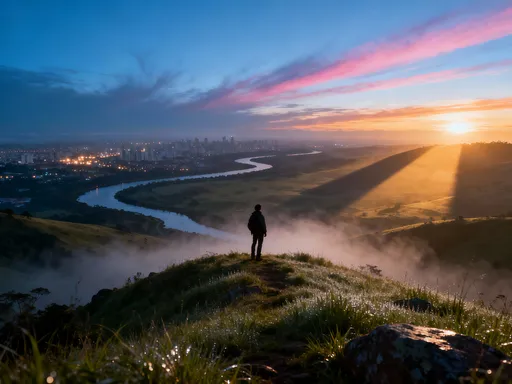
Elevated perspectives in Bucharest offer more than just panoramic photos — they provide context. From above, the city reveals its complexity in layers: the spires of Orthodox churches rising like sentinels, clusters of interwar buildings forming textured neighborhoods, and modern glass towers marking the pulse of economic growth. These vantage points, whether from hotel rooftops or accessible public spaces, allow visitors to understand how Bucharest fits together spatially and historically. The skyline is not uniform, nor does it strive to be. Instead, it tells a story of evolution — sometimes chaotic, often beautiful, always revealing.
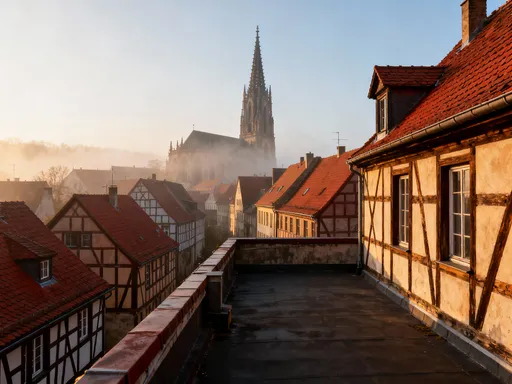
One of the most rewarding experiences is watching the city at golden hour from a high terrace. As the sun dips behind the southern hills, light washes across the rooftops in warm amber waves, highlighting the intricate details often missed at street level. Facades that appear plain during the day suddenly glow with texture — chipped plaster, carved stone, and aged metalwork all catch the low sun. The contrast between old and new becomes especially striking: a 1930s villa with a red-tiled roof sits just blocks from a sleek office tower, their coexistence feeling less like a clash and more like a dialogue across time.
Several accessible viewpoints offer these moments without requiring special access. Hotel terraces in the city center, particularly those oriented west or south, provide unobstructed views of the sunset over the urban landscape. Public buildings with observation areas, such as certain cultural institutions or reconstructed administrative centers, also allow visitors to take in the broader layout of the city’s districts. From this height, it’s possible to trace the arc of Bulevardul Magheru as it cuts through the heart of the capital, or follow the curve of the Dâmbovița River as it winds through green corridors. Each district — from the leafy expanses of Sector 1 to the denser fabric of Sector 3 — presents its own rhythm and character.
For photographers and casual observers alike, timing is essential. Early evening offers the most dynamic lighting, while dawn brings a softer, more diffused glow that emphasizes the city’s textures over its colors. Nightfall transforms the skyline once more, with streetlights and illuminated buildings creating a network of warmth against the darkening sky. These shifts in light don’t just change how the city looks — they change how it feels, offering a deeper connection to its daily rhythm.
Street-Level Framing: Alleys, Courtyards, and Urban Texture
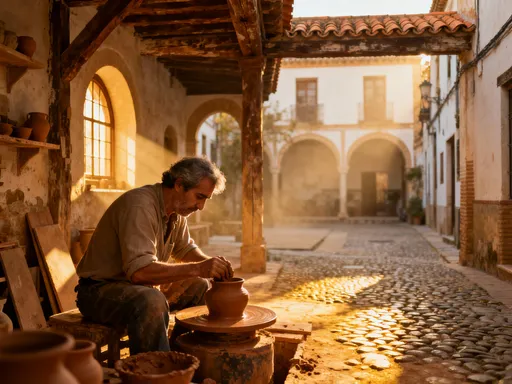
While the skyline captures the city’s grand scale, its true soul unfolds at ground level. Bucharest’s most memorable views are often intimate — framed by arched passageways, tucked into inner courtyards, or revealed at the end of a quiet alley. These micro-spaces, hidden behind unassuming entrances, offer a different kind of beauty: one defined by decay, renewal, and the quiet poetry of everyday life. Walking through neighborhoods like Lipscani or the residential streets of Sector 1, one begins to notice how the city frames its own moments — a flower box spilling geraniums from a third-floor balcony, a cat stretched across a sunlit windowsill, or the way afternoon light hits a mosaic tile on a courtyard wall.
These spaces are not curated for tourists. They exist because of how Romanians live — in buildings that blend private and communal life, where courtyards serve as shared extensions of homes. Many of these inner spaces date back to the early 20th century, designed around central open areas that allow light and air into dense urban plots. Today, they remain functional, often filled with potted plants, laundry lines, and the occasional parked bicycle. But they also serve as accidental galleries of urban texture: peeling paint reveals layers of past color choices, iron railings show the craftsmanship of a bygone era, and cracked stonework tells stories of weather and time.
The act of wandering through these areas becomes a form of visual exploration. There are no formal tours, no marked trails — just the reward of paying attention. A narrow passage between two buildings might open into a sun-dappled courtyard where ivy climbs a century-old wall. A forgotten doorway might frame a perfect shot of a baroque pediment against a blue sky. These moments are fleeting, unrepeatable, and deeply personal. They don’t appear on postcards, but they linger in memory longer than any monument ever could.
What makes these street-level views so powerful is their authenticity. They are not preserved behind glass or protected by velvet ropes. They are lived-in, imperfect, and constantly changing. Yet within that imperfection lies a kind of beauty — not polished, but honest. It’s the beauty of a city that doesn’t try to hide its scars, but wears them as part of its identity. For the mindful traveler, these details become the real landmarks — not the ones listed in guidebooks, but the ones discovered through slow, intentional observation.
Architectural Journeys: From Palace to Pastel Buildings
Bucharest’s architectural landscape is one of the most diverse in Eastern Europe, shaped by waves of influence, ambition, and adaptation. While the Palace of the Parliament often dominates the narrative — and for good reason, given its scale and historical weight — the city’s visual richness extends far beyond this single monument. The true story of Bucharest’s architecture is found in its neighborhoods, where Neo-Romanian villas with tiled roofs and wooden fretwork sit beside Secessionist buildings adorned with floral mosaics and curved lines. Interwar apartment blocks, many built during a period of national prosperity, feature symmetrical facades, decorative stonework, and large windows designed to capture light.
This architectural collage is not accidental. Bucharest grew rapidly in the late 19th and early 20th centuries, earning the nickname 'Little Paris' for its wide boulevards and elegant buildings. Architects trained in Vienna, Paris, and Bucharest itself brought European styles and adapted them to local tastes and materials. The result was a city that felt cosmopolitan, yet distinct. Even under later regimes that prioritized function over form, many of these buildings survived — altered, sometimes neglected, but still standing as testaments to a different era of urban ambition.
Today, the coexistence of preservation and decay adds depth to the viewing experience. In some areas, restoration efforts have brought faded facades back to life, revealing original colors and intricate details. In others, buildings remain in various states of disrepair, their beauty emerging through contrast — a perfectly carved stone cherub above a boarded-up window, or a bright blue door in a crumbling wall. These contrasts do not diminish the city’s appeal; they enhance it, offering a more honest portrayal of urban life.
For those interested in architecture, the best approach is not to seek out famous names or protected landmarks, but to walk without a fixed destination. Certain streets in the northern and central sectors are particularly rich in photogenic details — not because they are pristine, but because they are layered. A single block might contain a 1920s bank building with Art Deco lettering, a 1950s school with Socialist-era murals, and a newly converted café in a repurposed townhouse. Each structure contributes to a visual narrative that is constantly evolving, shaped by history, economics, and the choices of those who live here.
Green Spaces as Viewing Platforms: Parks with Perspective
Bucharest’s parks are more than just places to rest — they are essential viewing platforms that reframe the city. In these green oases, the urban landscape softens, allowing nature and architecture to interact in unexpected ways. Herăstrău Park, one of the largest in the city, offers long sightlines across tree-lined avenues and reflective lakes, where the silhouettes of buildings appear in the water like distant memories. Cișmigiu Gardens, centrally located and beloved by locals, provides a more intimate experience — a place where shaded paths, blooming flowerbeds, and the gentle ripple of fountains create a sense of balance amid the city’s bustle.
What makes these parks so effective as viewing spaces is their ability to filter the city through nature. Trees frame distant rooftops, lakes mirror the sky and surrounding buildings, and winding paths reveal carefully composed scenes — a bridge over still water, a pavilion half-hidden by foliage, a couple reading on a bench under a chestnut tree. These moments are not staged, but they feel curated by the landscape itself. The visual rhythm slows, inviting contemplation rather than haste.
Even smaller green spaces, like the gardens around churches or the tree-lined medians of major boulevards, contribute to this effect. They break up the density of the urban fabric, offering breathing room and visual relief. In spring and early summer, when the city is lush with greenery, these spaces become even more powerful — not just as escapes, but as lenses through which to see Bucharest differently. The contrast between stone and leaf, metal and vine, movement and stillness, creates a more harmonious picture of urban life.
For visitors, spending time in these parks is not a diversion from sightseeing — it is an essential part of it. They provide context, contrast, and calm. They remind us that a city is not just its buildings, but the spaces between them. And in Bucharest, those green spaces are not afterthoughts — they are integral to how the city sees itself, and how it can be seen by others.
Sunset, Light, and the Rhythm of the Day
The way light moves across Bucharest is one of its most understated wonders. Unlike cities with uniform skylines or tightly packed streets, Bucharest’s varied architecture and open spaces allow light to play in complex ways. In the morning, a soft haze lingers over tiled roofs and tree canopies, softening edges and muting colors. As the sun rises higher, shadows grow sharper, defining textures — the grooves in stone, the pattern of brickwork, the curve of a wrought-iron railing. This midday clarity is ideal for noticing architectural details, for seeing the city as it truly is, unfiltered by atmosphere.
But the most transformative light comes in the late afternoon and early evening. As the sun begins its descent, the city shifts into a warmer palette. Golden light spills across facades, turning pale yellow walls into glowing amber, illuminating stained glass in church windows, and setting rooftops ablaze with reflected warmth. This is the time when Bucharest feels most cinematic — when even ordinary streets seem to carry a sense of drama. The contrast between sunlit and shadowed areas creates depth, making the city feel more three-dimensional, more alive.
Photographers often plan their routes around this daily rhythm, knowing that the same location can look entirely different at 9 a.m., 3 p.m., and 7 p.m. But the experience is just as valuable for the casual observer. Simply sitting on a park bench, walking through a courtyard, or pausing on a bridge at sunset can transform an ordinary moment into something memorable. These fleeting changes in light don’t require special equipment or expertise — just presence.
And as night falls, the city takes on another character. Streetlights flicker on, windows glow from within, and illuminated signs cast pools of color onto wet pavement. The skyline, now outlined in electric light, becomes a different kind of artwork — one built from human activity rather than natural light. This rhythm, repeated every day, reminds us that cities are not static. They breathe, shift, and change — and Bucharest, with its layered history and varied textures, offers one of the most rewarding visual performances in Europe.
Why Viewing Bucharest Changes Your Perception
To really see Bucharest is to revise your assumptions. The act of checking in — of stepping off the plane, walking the streets, pausing to look — becomes an act of noticing. It’s not just about capturing beautiful images, but about engaging with a city that refuses to be reduced to a single narrative. Bucharest does not offer the polished perfection of some European capitals, nor does it lean into the gritty exoticism that some travelers seek. Instead, it presents itself with quiet honesty — complex, layered, and full of in-between spaces.
What changes in the viewer is not just their opinion of the city, but their way of seeing. The experience teaches patience, attention, and the value of looking beyond the obvious. It encourages a slower, more reflective form of travel — one that finds meaning in peeling paint, in a cat on a windowsill, in the way light hits a mosaic at dusk. These moments, small and unremarkable on the surface, accumulate into a deeper understanding.
Bucharest’s true beauty lies in its authenticity. It is a city that has lived through upheaval, reinvention, and quiet resilience — and it shows. But rather than hiding its history, it wears it openly, inviting those who take the time to look closely. In doing so, it offers a powerful reminder: that beauty is not always pristine, and that some of the most meaningful experiences come not from ticking off landmarks, but from allowing a place to reveal itself, one honest glance at a time.
So when you check in to Bucharest, don’t just visit. See it. Notice the details. Let the city surprise you. Because the real journey isn’t measured in miles or monuments — it’s measured in moments of seeing, and being seen by a place that has waited, quietly, to be understood.