You Won’t Believe What I Saw Through My Lens in Yangon
Yangon isn’t just Myanmar’s largest city—it’s a living canvas of golden spires, colonial echoes, and street life that moves like poetry. As a photographer, I went looking for iconic shots, but what I found was deeper: fleeting moments of light, color, and humanity that no postcard could capture. From dawn at Shwedagon to hidden alleyways humming with activity, every frame told a story. This is more than sightseeing—it’s seeing the soul of a city through your viewfinder.
The Golden Glow: Shwedagon Pagoda at Sunrise
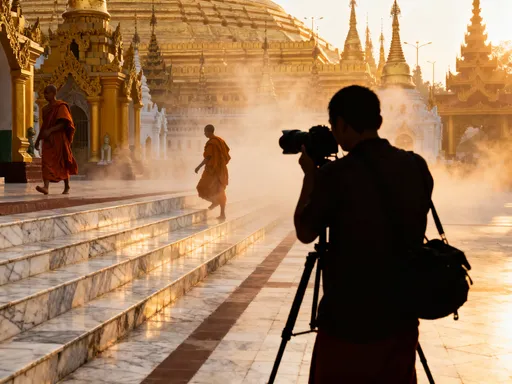
There is a moment, just before the sun breaches the horizon, when the world feels suspended. At Shwedagon Pagoda, this stillness is sacred. The 99-meter golden stupa, encrusted with diamonds and centuries of devotion, begins to glow as the first light touches its tip. Mist curls around the marble pathways, and the scent of jasmine and sandalwood drifts through the air. Monks in saffron robes move silently, their alms bowls catching the soft pink hues of morning. This is not just a landmark—it is the spiritual heart of Yangon, and photographing it at dawn is an act of reverence as much as artistry.
Timing is everything. Arriving before 5:30 AM ensures you beat the heat, the crowds, and the glare. The early light wraps the pagoda in a warm, diffused glow, eliminating harsh shadows and enhancing the texture of gold leaf and polished stone. For photographers, this golden hour offers ideal contrast and depth. Use a wide-angle lens to capture the full grandeur of the stupa against the awakening sky, or zoom in on details—the intricate carvings on a guardian naga, the reflection of a monk in a still pool, the hands of a devotee placing lotus blossoms at a shrine. These intimate moments speak louder than sweeping panoramas.
Respect is non-negotiable. Shwedagon is an active place of worship, not a backdrop. Always remove your shoes before ascending the platform, dress modestly, and avoid standing directly in front of someone in prayer. Never use a flash near worshippers, and refrain from photographing private rituals unless explicitly permitted. Instead, let patience be your guide. Sit quietly, observe the flow of movement, and wait for the natural rhythm of life to unfold. The most powerful images emerge not from intrusion, but from presence.
Colonial Echoes: Yangon’s Forgotten Facades
Downtown Yangon tells a different story—one of time paused, of beauty weathering decay. Once the administrative center of British Burma, this district is lined with early 20th-century buildings that speak of imperial ambition and tropical neglect. Crumbling stucco, rusted iron railings, and shuttered windows frame stories of a bygone era. Yet, in their disrepair, these structures possess a haunting elegance. The play of light and shadow across peeling paint, the geometric symmetry of arched colonnades, and the jungle’s quiet reclamation of concrete and steel create compelling subjects for black-and-white photography.
The best time to photograph these facades is late afternoon, when the sun slants at a low angle, casting long shadows that emphasize texture and depth. A 35mm or 50mm prime lens works well in the narrow streets, offering sharp detail without distortion. Look for contrasts: a bright red hibiscus growing through cracked pavement, a modern motorbike parked beneath a colonial clock tower, or a child’s chalk drawing on a centuries-old wall. These juxtapositions speak to Yangon’s layered identity—simultaneously ancient, colonial, and defiantly modern.
Safety and sensitivity are essential. While many buildings are abandoned, others are still occupied by families, small businesses, or government offices. Always ask permission before entering private spaces or photographing residents. Avoid using drones in the city center, as regulations are strict and privacy is deeply valued. Instead, engage with the environment on foot. Walk slowly. Notice the craftsmanship in wrought-iron balconies, the faded elegance of mosaic floors, and the way tropical vines climb like green veins up once-grand facades. These details, often overlooked, become the soul of your composition.
Street Life in Motion: Markets, Vendors, and Commuters
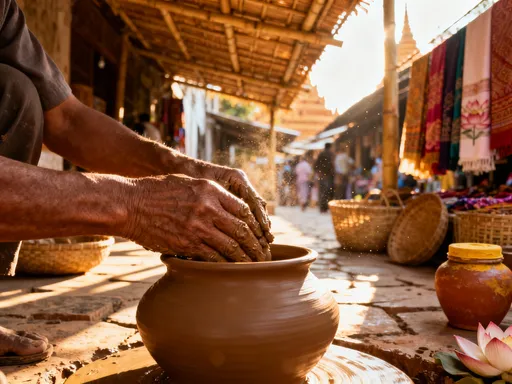
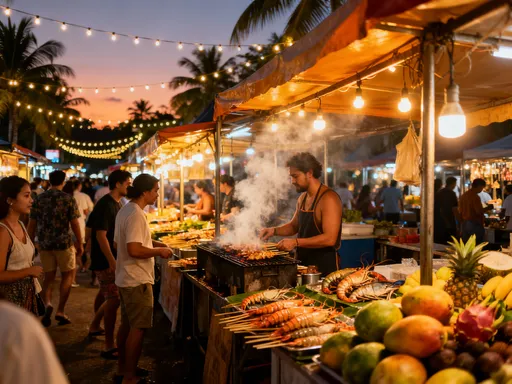
No city breathes quite like Yangon in its markets. Bogyoke Aung San Market, one of the oldest and most vibrant, is a sensory explosion. Sunlight filters through corrugated tin roofs, casting dappled patterns on rows of jade, lacquerware, and handwoven textiles. Vendors call out in Burmese and English, their hands moving with practiced speed—tying knots, weighing gemstones, folding garments with precision. Children dart between stalls, elders sip steaming tea from clay cups, and tourists haggle with smiles. It is here, in the rhythm of daily commerce, that Yangon reveals its warmth and resilience.
Capturing this energy requires more than a good camera—it demands empathy. Street photography in Yangon is not about stealing images, but about honoring the humanity in motion. When photographing people, especially in close proximity, a smile and a nod go further than a lens cap. In many cases, asking permission is not only respectful but enriching; it often leads to conversation, a shared laugh, or an invitation to see something behind the counter. These moments, though unplanned, often yield the most authentic images.
For technical success, use a fast shutter speed to freeze motion—especially useful for capturing motorbikes weaving through traffic or a vendor tossing tea leaves into a sack. A slightly higher ISO may be necessary under dim market lighting, but modern cameras handle noise well. Compositionally, look for leading lines: rows of umbrellas, stacked baskets, or the curve of a wooden counter. Frame your subject with natural elements—steam from a food stall, a hanging lantern, or the silhouette of a palm hat. These layers add context and depth, turning a simple portrait into a narrative.
Equally important is knowing when not to shoot. Avoid photographing during religious ceremonies, private family moments, or scenes of hardship without consent. The goal is not to exploit, but to document with dignity. When done right, street photography becomes a form of storytelling—one that preserves the dignity of its subjects while revealing the beauty of ordinary life.
Hidden Alleys and Secret Courtyards
Beyond the well-trodden paths lies a quieter Yangon—one of shaded lanes, flowering frangipani trees, and homes with wooden gates that creak open to reveal inner worlds. These residential neighborhoods, particularly near Inya Lake and around older monasteries, offer a different pace and palette. Pastel-colored houses with tin roofs, overgrown gardens, and laundry lines strung between trees create intimate, painterly scenes. It is in these spaces that the city exhales, away from the buzz of traffic and commerce.
Exploration here is best done on foot, camera in hand but not always raised. Some of the most powerful images come from simply being present—watching an elderly woman water her orchids, a cat stretch on a sun-warmed step, or a group of schoolchildren kick a makeshift ball down a dirt lane. These moments are not staged; they are gifts of observation. A 50mm lens is ideal for capturing both environmental context and facial expression without intrusion.
Golden hour—just before sunset—transforms these alleys into dreamlike corridors. The low, warm light turns dust into gold, highlights the texture of weathered wood, and casts long, soft shadows. Prayer flags flutter like whispers, and the scent of cooking rice drifts from open windows. These are the details that linger in memory, the quiet poetry of a city that lives at human scale.
To find these spots, wander without a map. Turn left when everyone else turns right. Follow the sound of a monk’s chant or the scent of jasmine. Some of the most beautiful courtyards are behind unmarked gates, visible only through a gap in the foliage. If you see an open doorway or a welcoming face, a polite greeting in Burmese—"Mingalaba"—can open doors, literal and figurative. Always remember: you are a guest. Tread lightly, speak gently, and leave no trace. The reward is not just a photograph, but a connection.
Colors of Faith: Temples Beyond Shwedagon
While Shwedagon dominates the skyline, Yangon’s spiritual landscape is rich with smaller, equally compelling temples. Sule Pagoda, nestled in the heart of the city’s financial district, stands as a beacon of continuity amidst modern development. Surrounded by traffic and skyscrapers, its golden spire rises like a promise of peace. Botataung Pagoda, rebuilt after wartime destruction, houses sacred relics and offers a more intimate experience, with reflective pools and quiet corridors perfect for contemplative photography.
Each temple presents unique visual opportunities. Kyauktawgyi, home to a massive marble Buddha carved from a single block, offers dramatic scale and symmetry. The play of light through high windows onto the Buddha’s serene face creates a natural spotlight, ideal for long exposures and thoughtful composition. Reflective glass walls and mirrored ceilings in some temples pose challenges, but also opportunities—use them to capture layered images, where the present moment folds into a mosaic of reflections.
Photographing these sites requires awareness of religious customs. Some areas may be off-limits to cameras, especially inner sanctums or during private ceremonies. Always follow signage and heed the guidance of attendants. When in doubt, put the camera down and simply observe. Sometimes the most profound images are the ones we carry in memory, not on a memory card.
Color plays a powerful role in these spaces. The deep reds of monk robes, the gold leaf on stupas, the vibrant marigolds offered at altars—these are not just visual elements, but expressions of faith. Use color intentionally. A red robe against a white wall creates bold contrast; a single lotus in a sea of gray stone speaks of purity. These choices elevate your photography from documentation to art.
Light and Rhythm: Capturing Yangon’s Transitions
Yangon is a city of rhythms—of tides, traffic, prayer, and weather. To photograph it well is to understand its tempo. Dawn brings stillness, midday brings heat and harsh light, evening brings markets and movement, and night brings quiet devotion. Each phase demands a different approach. In the morning, use soft natural light to highlight texture and emotion. At midday, seek shade, use diffusers, or embrace high-contrast scenes for dramatic effect. In the evening, switch to slower shutter speeds to capture motion—lanterns swaying, incense smoke curling, people moving in silhouette.
White balance is crucial in tropical light, where colors can shift from warm gold to cool blue in minutes. Shooting in RAW format allows for greater flexibility in post-processing, preserving detail in both shadows and highlights. Use a tripod for low-light situations, especially during evening prayers at temples, where flash is prohibited and stillness is required.
Understanding shutter speed transforms your ability to tell stories. A fast shutter freezes a child’s laugh, a vendor’s hands, or a motorbike’s leap over a pothole. A slow shutter blurs motion—turning a procession of monks into a river of saffron, or traffic into streaks of light. These techniques are not just technical choices; they are emotional ones. They allow you to convey not just what you saw, but how it felt.
Composition follows the city’s own logic. Look for symmetry in temple architecture, repetition in market stalls, and negative space in quiet courtyards. Use the rule of thirds, but don’t be enslaved by it. Sometimes the most powerful image breaks the rules—placing a lone figure in the corner of the frame, or letting a single beam of light dominate the scene. Trust your eye. Trust the moment.
Why Yangon Stays in Your Frame
Months after leaving Yangon, certain images remain vivid: the curve of a monk’s back as he sweeps the temple steps, the way light fell on a child’s face in a market alley, the silence of a courtyard at dusk. These are not just photographs—they are memories etched in light and shadow. What makes Yangon unforgettable is not its landmarks alone, but the way it invites you to look deeper, to slow down, to see with intention.
Photography, at its best, is an act of attention. In Yangon, that attention is rewarded. The city does not perform for the lens; it simply lives. And in that authenticity, there is beauty. Every cracked wall, every smiling vendor, every golden spire tells a story of resilience, faith, and daily grace. To photograph Yangon is not to capture perfection, but to honor the imperfect, the fleeting, the human.
For travelers, especially women over thirty who seek meaning in their journeys, Yangon offers more than sights—it offers connection. It reminds us that travel is not about ticking boxes, but about opening hearts. It teaches us to move with respect, to observe with empathy, and to create with humility. Whether you carry a professional camera or a smartphone, the principles are the same: be present, be patient, be kind.
So go. Pack your lens, your curiosity, and your respect. Let Yangon surprise you. Let it challenge your assumptions. Let it show you that the world is still full of quiet wonders, waiting not to be conquered, but to be seen. And when you return home, and scroll through your images, you’ll find that some frames hold more than light—they hold a piece of a city’s soul, and a part of your own journey within it.