What Happens When You Slow Down in the Atacama During Festival Season?
You know that feeling when you rush through a trip and forget half of it by the time you land back home? Yeah, I used to do that—until I spent three weeks in Chile’s Atacama Desert, timed perfectly with local festival season. Instead of ticking off attractions, I lived like a local, waking with the sun, sharing meals with artisans, and dancing under stars that looked close enough to touch. This isn’t just travel—it’s transformation. Slow down, and the desert starts to speak. In a place where time moves differently and silence is a language of its own, rushing through feels less like exploration and more like trespassing. The Atacama, one of Earth’s oldest and driest deserts, offers not just landscapes but lessons—for those willing to pause, listen, and be present. And when that stillness coincides with the rhythm of ancestral festivals, something profound unfolds: a connection not only to place, but to people, tradition, and the quiet pulse of living culture.
Why the Atacama Desert Calls for Slow Travel
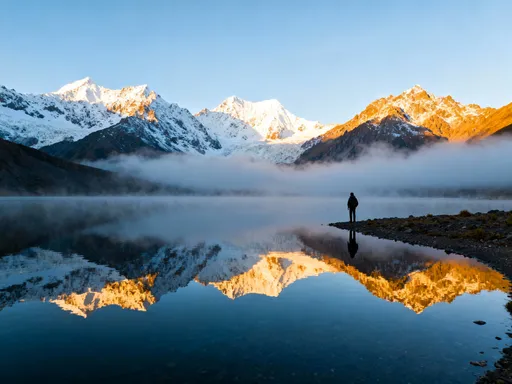
The Atacama Desert stretches across northern Chile like a vast, open palm etched with canyons, salt flats, and volcanic peaks. At over 4,000 meters above sea level in many areas, it challenges the body even before it stirs the soul. This is not a destination designed for speed. The thin air demands patience; sudden movements bring dizziness, and overexertion can lead to altitude sickness. But beyond physical necessity, the desert itself resists hurried footsteps. Its beauty lies not in grand, singular landmarks but in the accumulation of subtle details—the way morning light warms the ochre cliffs of Valle de la Luna, the faint trails left by vicuñas across the altiplano, the sudden bloom of wildflowers after rare rains.
Equally important is the cultural landscape. The Atacama has been home to Indigenous communities—the Aymara, Atacameño (Likan Antai), and Quechua—for thousands of years. Their relationship with the land is not one of tourism, but of reciprocity. Mountains are not just scenery; they are apus, or sacred guardians. The earth is Pachamama, to be honored, not exploited. These beliefs are not performances for visitors—they are woven into daily life, agricultural cycles, and spiritual practices. To witness them authentically, one must shed the role of observer and become, even briefly, a guest.
Fast tourism fails here because it treats culture as content. A two-hour guided tour of a ceremonial site, a photo taken during a dance without understanding its meaning, a visit to a market solely to buy souvenirs—these actions extract without giving. In contrast, slow travel in the Atacama means allowing space for relationships to form. It means returning to the same artisan’s stall not just to purchase, but to ask how the natural dyes are made, to learn the story behind a textile pattern, or to share a cup of coca tea. It means understanding that some moments are not meant to be captured, but carried.
Moreover, the distances between sites are immense. Driving from San Pedro de Atacama to the Tatio Geysers, for example, takes nearly two hours over rough terrain. Attempting to visit multiple locations in a single day leads to fatigue and diminished presence. The desert rewards those who travel less but experience more deeply. When you slow down, the silence begins to reveal its layers—not emptiness, but fullness. The wind carries whispers of ancient rituals. The stars, undimmed by light pollution, seem to pulse with memory. This is not a place to conquer, but to receive.
Timing It Right: Aligning with Local Festival Rhythms
The festival season in the Atacama region, typically spanning late winter to early spring (July through October), offers a rare window into the living heart of Andean culture. Unlike commercialized celebrations designed for tourists, these festivals are rooted in agricultural cycles, Catholic traditions adapted over centuries, and pre-Columbian spiritual beliefs. Among the most significant is Pukllay, also known as the Altiplanic Carnival, celebrated in villages like San Pedro de Atacama, Toconao, and Socaire. These are not weekend events but multi-day gatherings that involve entire communities in preparation, prayer, music, and shared labor.
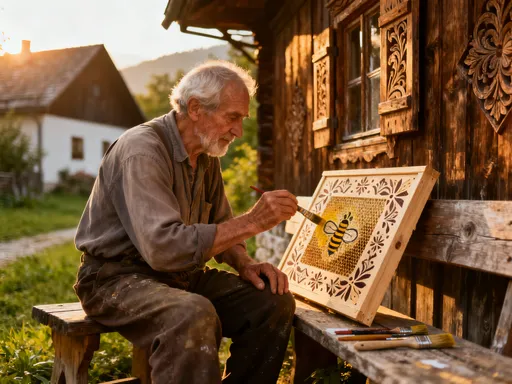
Pukllay, meaning "to play" in Quechua, is far more than entertainment. It is an offering—a way to give thanks for the harvest, to honor Pachamama, and to ensure balance between humans and nature. The festival often begins weeks in advance, with families cleaning homes, preparing food, and crafting traditional costumes. The masks worn by dancers, known as morenos, are hand-carved and painted with symbolic colors representing the earth, sky, and ancestral spirits. To witness the creation of these masks is to see devotion in motion.
For travelers, timing a visit to coincide with these festivals requires planning and flexibility. Most events are not advertised on international tourism calendars, and dates may shift slightly based on local decisions or agricultural needs. Booking accommodations in San Pedro de Atacama three to six months in advance is advisable, especially during peak festival weeks. But beyond logistics, the real preparation is internal: a willingness to adapt, to follow local cues, and to participate with humility.
Those who stay long enough are often invited to join processions, share in communal meals, or sit in family courtyards as elders recount stories passed down through generations. Children dance with unselfconscious joy, elders bless crops with coca leaves, and drumbeats echo across the altiplano like a heartbeat. These moments are not staged. They unfold organically, and they are accessible only to those who have taken the time to be seen—not as tourists, but as respectful guests. The festival is not a show; it is a way of life, momentarily amplified.
Living in San Pedro: Basecamp for Immersive Experiences
San Pedro de Atacama, a small adobe town cradled by desert and mountains, serves as the primary gateway to the region. But for the slow traveler, it is far more than a transit point—it is a place to settle in, to learn the rhythm of daily life, and to build connections. The town’s low-rise architecture, built from sun-dried clay bricks, blends seamlessly with the landscape. Narrow streets, unpaved in parts, invite walking. There are no traffic lights, few cars, and an overall pace that encourages lingering.
Choosing where to stay makes a difference. While luxury lodges exist on the outskirts, the most immersive experiences come from family-run guesthouses or eco-lodges within walking distance of the town center. These accommodations often include shared kitchens, communal gardens, and hosts who are eager to share local knowledge. A simple conversation over breakfast might lead to an invitation to a nearby village festival or a recommendation for a hidden thermal spring known only to residents.
Living like a local means adopting small routines. Eating breakfast at the same café each morning, where the owner begins to recognize your order. Walking to the artisan market not to shop, but to watch weavers at work, to learn the difference between alpaca and llama wool, or to understand the significance of a particular geometric design. Renting a bicycle instead of booking a 4x4 tour allows for spontaneous stops—a conversation with a farmer tending quinoa, a chance to photograph a herd of flamingos at Laguna Chaxa without the crowd.
Language, too, becomes a bridge. While Spanish is widely spoken, learning a few words in Kunza, the traditional language of the Atacameño people, signals respect. Phrases like "kauka" (hello) or "sakita" (thank you) may be met with surprise and warmth. Even imperfect attempts open doors. One traveler recalled how, after weeks of greeting an elder artisan with the same hesitant phrase, she was invited into her home to help prepare food for an upcoming celebration. Such moments do not happen in a day. They grow from consistency, presence, and the quiet accumulation of trust.
Festival Moments That Define the Soul of the Desert
When festival night arrives, the desert transforms. Torchlight flickers against canyon walls. Drums, made from llama skin and native wood, pulse in rhythmic unison. Dancers in elaborate costumes—feathers, mirrors, sequins, and hand-carved masks—move in precise formations, their steps synchronized with chants in Quechua and Kunza. These are not performances for an audience. They are acts of devotion, storytelling, and community cohesion.
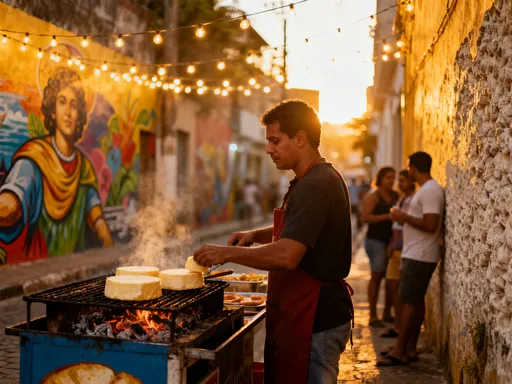
One unforgettable scene unfolds in the central plaza of San Pedro during Pukllay. As dusk settles, families gather with steaming pots of locro, a hearty stew made with potatoes, corn, and meat. Children dart between tables, elders bless the food with coca leaves, and musicians tune their flutes and drums. When the procession begins, it moves slowly, deliberately, winding through the streets with stops at sacred points—crossroads, ancient walls, natural springs. Each pause includes an offering: a pinch of flour, a sip of chicha (fermented corn drink), a prayer whispered to the wind.
For the slow traveler, these moments are not viewed from a distance. They are lived. You might find yourself handed a drum and guided into the rhythm. You might be invited to dance in a circle, your steps clumsy but welcomed. You might sit in a courtyard, sharing food with a family who asks about your home, your journey, your reasons for being here. These are not staged interactions. They are genuine exchanges, made possible by the time invested.
The emotional weight of such inclusion is profound. In a world where travel often feels transactional—pay for the tour, take the photo, move on—being welcomed into a sacred moment is humbling. It reminds you that some experiences cannot be bought. They must be earned through presence, patience, and respect. The desert does not give freely to those who pass through. It reveals itself to those who stay.
Beyond the Festivals: Rituals, Crafts, and Desert Wisdom
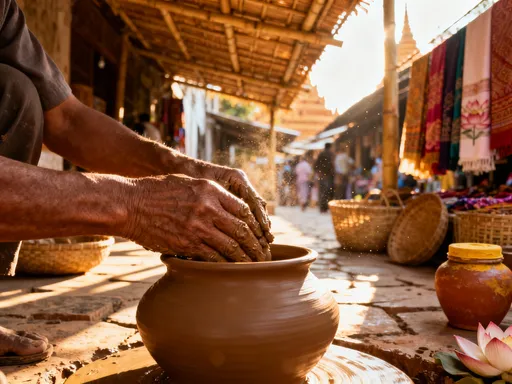
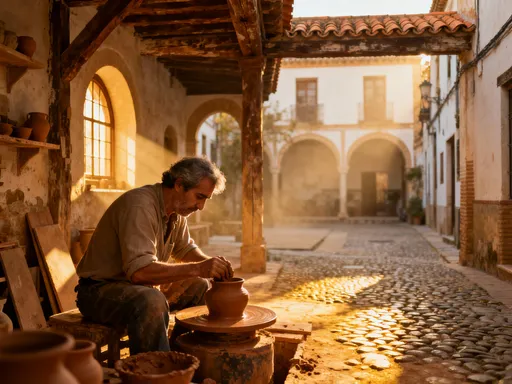
While festivals are powerful, the true depth of Atacameño culture lies in the everyday. Slow travel allows access to these quieter, equally meaningful moments. In the village of Talabre, for example, Aymara elders teach pottery using techniques unchanged for centuries. Clay is gathered from specific riverbeds, shaped by hand, and fired in open pits. Each vessel tells a story—its form, its pattern, its purpose. Participating in a workshop is not about making a souvenir. It is about understanding a worldview in which creation and utility are inseparable from reverence.
Stargazing in the Atacama is another example of culture and science intertwining. The region’s clear skies make it a global hub for astronomy, home to observatories like ALMA. But long before telescopes, Indigenous peoples mapped the cosmos through oral tradition. Local guides, many of whom are trained astronomers, share stories of the dark constellations—the Llama, the Serpent, the Fox—that navigate the Milky Way. To listen to these tales under a sky so dense with stars it feels three-dimensional is to experience knowledge as both science and spirit.
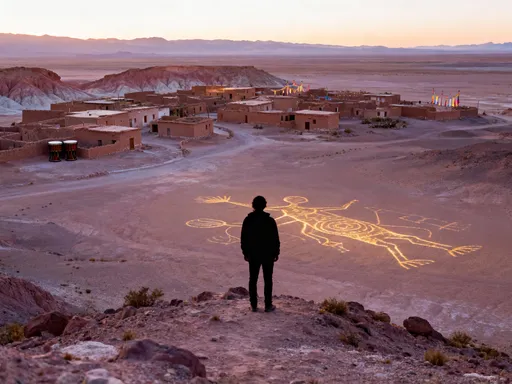
Then there are the geoglyphs—ancient rock carvings etched into hillsides, visible only from a distance. Unlike the famous Nazca Lines, many Atacama geoglyphs are not widely publicized. They are known to local communities, who protect them as sacred sites. A traveler who has built trust might be taken to one at dawn, where the first light reveals a giant condor or a spiraling serpent. There is no entrance fee, no signage, no crowd. Just silence, stone, and the weight of millennia.
These experiences are not found in guidebooks. They are not part of standard tours. They emerge from time, from relationships, from a willingness to be guided not by an itinerary, but by invitation. They remind us that the most meaningful travel is not about checking destinations off a list, but about allowing a place to change how you see the world.
Practical Slow Travel: How to Plan Without Overplanning
Slow travel does not mean lack of preparation. On the contrary, it requires thoughtful planning—just not rigid scheduling. The key is to balance structure with openness. Book accommodations in advance, especially during festival season, but resist the urge to fill every hour with activities. Limit excursions to one every 48 hours to allow for acclimatization and reflection. The body needs time to adjust to high altitude; the mind needs space to absorb what it has seen.
Choose transportation that fosters connection. Renting a bicycle or walking between sites in San Pedro allows for spontaneous interactions. If a guided tour is necessary—such as to the Tatio Geysers or the Salar de Atacama—opt for small-group operators that prioritize cultural sensitivity and environmental stewardship. Ask whether local guides are employed, whether profits support community initiatives, and whether the tour includes moments of silence or reflection, not just photo stops.
Pack with respect. Carry water to stay hydrated, but avoid single-use plastics. Bring a reusable bag for market purchases. If invited to a ceremony, consider bringing a small offering—coca leaves, sugar, or flowers—as a gesture of reciprocity. Do not photograph rituals without permission. In many communities, cameras are seen as intrusive, even disrespectful, during sacred moments. A smile, a bow, a moment of quiet presence often speaks louder than any image.
Finally, manage expectations. Not every day will feel extraordinary. Some mornings may bring fog, some afternoons fatigue. But these moments matter too. Sitting on a bench in the town square, watching children play, listening to the wind—this is where presence takes root. Slow travel is not about constant excitement. It is about depth. It is about learning to find wonder not only in the grand, but in the ordinary.
The Last Sunrise: What Slow Travel Leaves Behind
On the final morning, as the sun rises over the Andes, painting the sky in hues of rose and gold, the traveler begins to understand what has changed. It is not just the photos saved or the souvenirs collected. It is the quiet shift within—the ability to listen more, to move slower, to value presence over productivity. The desert has given a gift: the reminder that life, like travel, is not measured in miles covered, but in moments truly felt.
Memories linger—the shared laughter during a festival meal, the elder who taught you how to weave, the silence of a midnight stargazing session where the universe felt intimate. These are not fleeting impressions. They are imprints. They shape how you return home—not as someone who "saw" the Atacama, but as someone who, for a brief and beautiful time, belonged to it.
And that is the essence of slow travel. It is not a trend or a luxury. It is a return to what travel once was—a journey of connection, of humility, of transformation. In an age of speed and distraction, choosing to slow down is an act of courage. It means rejecting the checklist, embracing uncertainty, and trusting that the most meaningful experiences cannot be planned—they must be lived.
So the next time you plan a trip, ask not how much you can see, but how deeply you can feel. Let places like the Atacama remind you that the world speaks softly—to those who are willing to listen. Slow down. Stay longer. Let the desert, and its people, teach you what it means to truly arrive.